Category: Blog

  • Our current system strains under REAL competition

    If you want to see exactly why Arizona’s election system needs an upgrade, just look at the high-stakes drama currently brewing in Tempe.

    Lately, the city has been a pressure cooker of civic debate. The spark was a controversial parks ordinance that activists claimed was a targeted attempt to stop aid groups from feeding unhoused neighbors. City leaders insisted the update was merely a “content-neutral” cleanup of a code that hadn’t been touched since 1967.

    It’s safe to say the community wasn’t buying it!

    The fallout was immediate, with citizens  moving to gather signatures to attempt a repeal of the council’s measure. Voters quickly gathered nearly 5,000 signatures to reverse the council’s actions, and they were able to accomplish this despite allegations of the mysterious funding for out-of-state counter petitioners and the spreading of disinformation around the citizen-led effort.

    A surge of new candidates stood up to run for office… but there’s a problem

    This local friction has sparked an incredible surge of engagement, with seven candidates now vying for three open council seats. But here’s the problem: our current system isn’t built to efficiently handle this much democracy.

    Because so many people are running, Tempe is staring down a two-step “runoff” process:

      The Primary: March 10th

      The “General” (Runoff): May 19th

    Under city code, unless a candidate clears a strict 50% majority in March, the race drags on into May. This “do-over” election costs taxpayers a fortune and historically sees a massive drop-off in voter turnout, which will see a disproportionately low-level of turnout for the most marginalized voters among us.

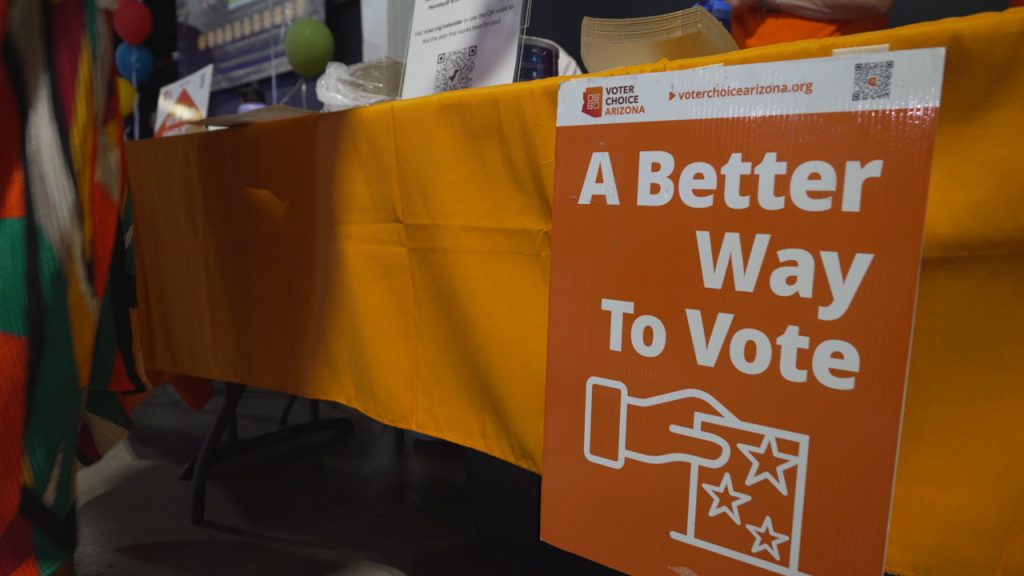
    There’s a Better Way

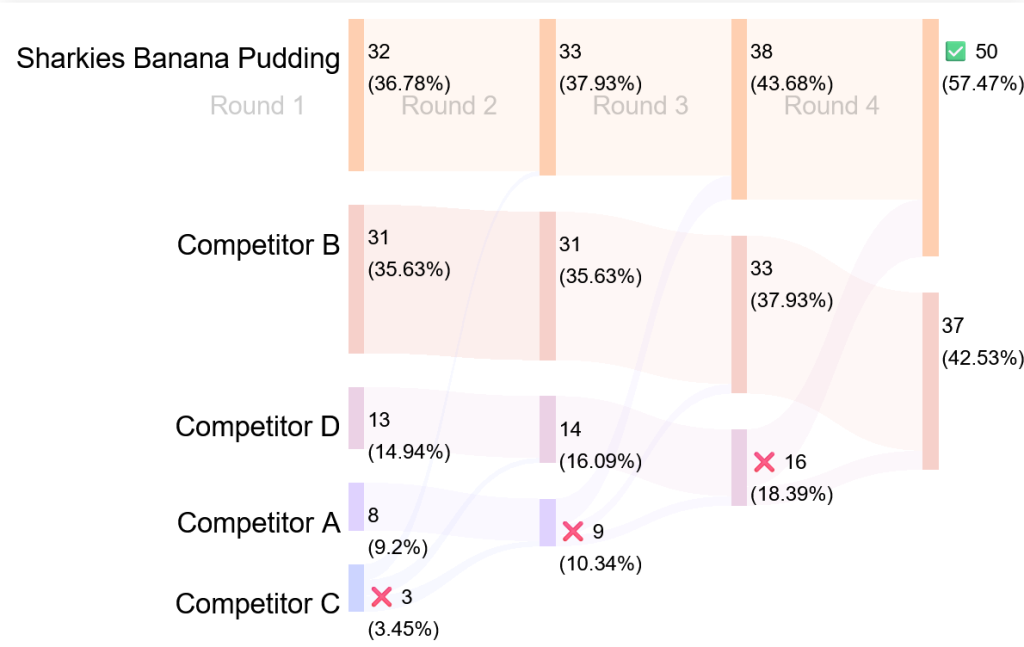
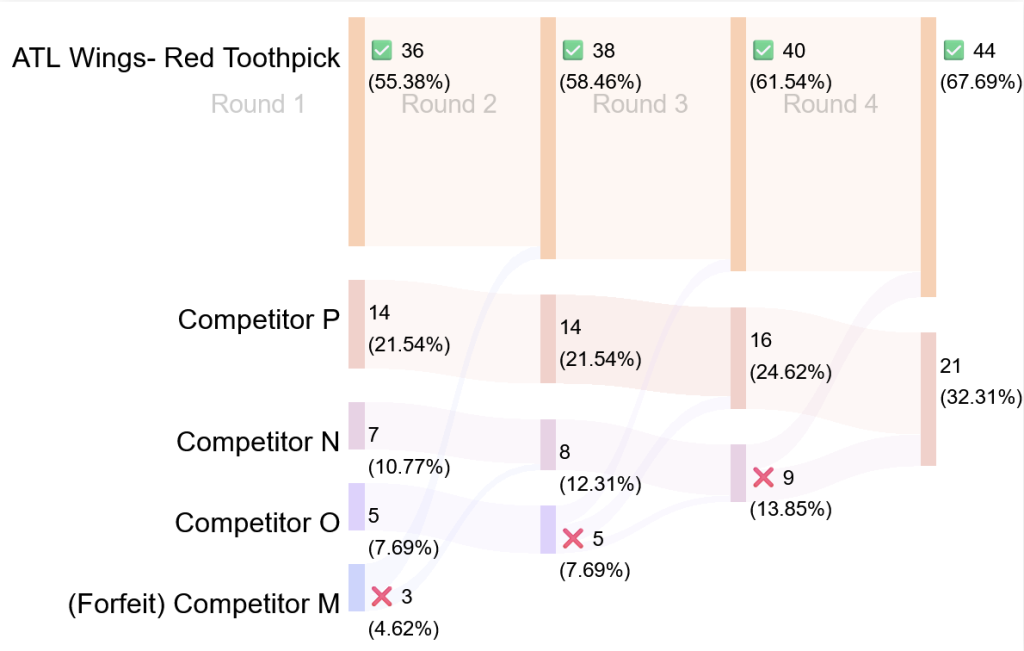
    With Ranked Choice Voting, Tempe could have a single, high-turnout election in March. Voters would rank their favorites, and the winners would be decided then and there with broad majority support. No expensive second election, because RCV enables you to hold an “instant runoff” on the same ballot.

    Tempe is just one example of a community that’s proving the appetite for engagement is high, but the system is lagging behind. Let’s work together to make “one and done” the new standard for Arizona.

    […]

    Warmly,

    Kazz Fernandes
    Executive Director
    Voter Choice Arizona
    ***UPDATE***

    This email went out to our list prior to the March 10th election. Since then, our prediction proved to be correct. Only 1 candidate reached the threshold needed to claim one of the three seats up for election in the March race. This means that for the first time in a decade, Tempe will have runoff elections for to fill the 2 remaining seats. This could have been avoided by using an instant runoff election, which would save taxpayer dollars while at the same time increasing participation.

    Above we listed the dates for Tempe’s local elections, but Tempe voters will also be receiving ballots for the July 21st Primary election for State and Federal offices, and just 3 months later will also be voting for the November 3rd general elections. Homeowners in Tempe will also be able to participate in the SRP Board elections on April 7th. In previous years, we’ve had to replace elected leaders due to death, resignation, or expulsion which could lead to additional special elections and special election runoffs. 5+ elections over just 9 months, this will lead to voter exhaustion and unnecessary, wasteful expenses for taxpayers. Adopting instant runoffs and aligning local elections with state and federal elections would be a simple solution to cap the number of elections to 2- 3 in a given year while still maximizing the voice of Arizona voters.

  • Better Ballots –> Better Arizona

    In 2023, the “Better Ballot, Better Arizona Act” was filed as a citizens’ initiative petition to amend the state constitution. Although the campaign ultimately didn’t collect the signatures needed to put it on the 2024 ballot for Arizona voters, we believe this proposed model would be a worthwhile improvement to Arizona elections.

    This measure would:

    • Equalize signature gathering requirements for candidates regardless of party.
    • Allow all voters, regardless of partisan registration, to participate in a unified primary election that includes all eligible candidates.
    • Allow voters to elect a majority winner by ranking up to 5 candidates in the general election.

    These improvements would put voters first by better aligning the incentives for candidates and elected officials with the will of the voters, regardless of party, including independents. Elected officials would be accountable to the majority of the constituents that they represent, not just voters from their party’s primary.

    You can find the Better Ballot, Better Arizona Act below.

    Overview:
    “This constitutional amendment broadens voters’ options for covered state and congressional offices in primary and general elections. For covered primaries, eligible voters may sign any nominating petition. Candidates for covered public office require the equal specified number of signatures and will be listed on the same ballot. For single-winner primaries, the top five candidates advance to the general election, while in multi-winner primaries, an additional candidate advances for each available seat. Voting is tabulated in rounds wherein candidates are eliminated or elected. If one’s first choice candidate is eliminated, one’s second choice candidate is counted as a first choice in the next round. Process continues until all available offices are filled with candidates receiving a majority of votes. Identifying candidate party affiliations is authorized. Any constitutional prohibition against local political subdivisions implementing this system is eliminated. Permits public money for presidential preference elections only if Independents and those with no party preference or registered with parties not qualified for representation on the ballot are allowed to vote in these primaries. Amendment exempts itself from Revenue Source Rule, or alternatively is funded with additional filing fee for political committees. Write-in candidates are disallowed.”

  • Thanks, Texas

    Thanks to the Texas State Legislature, gerrymandering is in the news. The efforts by the Texas GOP to add to their representation in the U.S. House of Representatives has triggered a backlash in states like California. 

    While some may sympathize with Gov. Newsom, it is important to remember that what gerrymandering really does is deprive the people of their sovereignty and place it in the hands of those who draw the lines. No matter who draws those lines, such action is counter to the fundamental principles of representative democracy. 

    However, that does not mean we have to sit on our hands and do nothing. There is a model for a reform that would offset the effects of gerrymandering by putting power back where it belongs, into the hands of the people. All we have to do is look North… to Alaska.

    Alaska passed historic election reform in 2020, adopting a system called Final Four Voting. 

    A recent vote in the Alaska legislature provides an example of how this type of election reform immunizes a government body from the effects of gerrymandering.

    A little background. Alaska’s legislature is composed of a House of Representatives and a Senate. There are 60 total members of the Alaska Legislature: 32 Republicans, 23 Democrats, and 5 independent or non-affiliated members.

    The Alaska legislature recently sent its budget to the governor. The governor, who has a line-item veto power, chose to veto an increase in the base funding for Alaska’s schools. A majority of Alaskan’s polled favored an increase in funding. However, most of us know that it takes a lot for elected officials to vote against their party.

    The Alaska legislature was able to override the governor’s veto when 10 Republicans voted against their governor and their Party. This is nearly a third of the total Republicans in the Alaska legislature.

    Can you imagine nearly a third of the Republicans in Congress voting against their party and Mr. Trump? Of course not. Realistically, it is doubtful that Congressional Democrats would behave any differently if the shoe were on the other foot.

    The reason for the difference is simple. In Alaska, because of the combination of both open primaries and ranked choice voting, legislators are responsible to all of their constituents, and not just a small, partisan base. This change encourages Alaska’s legislators to work for their communities, rather than having to blindly follow the dictates of their party in order to avoid being “primaried” in the next election. 

    Whether or not the override was a good policy is a matter of opinion for those who know far more about the issue. The point here is that a large number of legislators broke with their party to vote for what they believed was in the best interest of their state and their constituents. This behavior occurred because Alaska’s election reforms took power away from the partisan few who dominate the primary system in most states and put it into the hands of the People. 

    Sadly, Arizonans and most Americans can only dream of such responsible behavior from their elected representatives. That is because the current system benefits the factional few, and not the citizenry as a whole. That is the reason most of us find ourselves going to the polls and shaking our heads in frustration as we are continually forced to choose the lesser of two evils.

    Alaska’s experience demonstrates that the government can be better and more representative of the will of the People. Arizonan’s deserve real representation in government. Alaska’s experience shows us the way forward.

    Voter Choice Arizona is a non-partisan, non-profit organization dedicated to bringing reforms like those used in Alaska to Arizona. Reforms that make elections more fair, and Arizona’s government more representative and accountable to everyone. You can learn more by visiting us at vcaz.org.

    Mark Cable 
    Volunteer
    Voter Choice Arizona
    Surprise, Arizona

    Sources: